 Alejandro C.
An avant-garde armchair can elevate a living room instantly... or clash if chosen only for aesthetics. The key is to find balance between form and comfort: a piece that looks current (clean lines, sculptural volumes, organic shapes) and that, at the same time, invites you to actually sit, especially when the body starts asking for more ergonomics from age 40 onwards.
At Komoder we sum it up like this: a good design armchair is not the one that "looks nice" in the photo, but the one that improves your rest day-to-day without sacrificing style. With that idea in mind, let's clarify what defines an avant-garde armchair today and how to integrate it into modern decor coherently.
What makes an armchair "avant-garde" today (beyond being unusual or striking)
Avant-garde is not about extravagance: it's about design intention. An armchair can be very modern without being strident if it combines well-thought proportions, honest materials and a clear formal language (curved volumes, integrated legs, lightweight structures or discrete rotating base).
In modern decor, the avant-garde piece usually functions as a focal point: an element that "breaks" the monotony of straight sofas and neutral furniture. For the effect to be elegant, consistency matters more (textures, heights, tones) than form alone.
Organic shapes: why they're so present in current design
Organic shapes (curves, rounded edges, enveloping silhouettes) bring something many homes need: visual warmth. In spaces with very straight lines, a curved armchair balances and softens. Moreover, when well executed, these shapes usually also translate into a sense of embrace and comfortable support when sitting.
With our clients, when someone hesitates between "curved" or "minimal", we usually recommend looking at the whole: if there are already many straight lines (TV stand, shelving, table), the organic armchair acts as a counterpoint and the space feels more premium and livable.
The real balance: how to check if a design armchair will be comfortable in your routine
A design armchair can be spectacular and still uncomfortable if it doesn't fit your body and your use. From age 40 onwards, many people notice that not any seat works anymore: posture, height and lumbar support become decisive.
At Komoder, before talking about styles, we always land a question: "what do you want it for?" It's not the same a reading armchair, a conversation one, or one for "my time" at the end of the day. That intention defines the level of backrest, the depth of the seat and even whether it's worth being swivel.
Quick comfort checklist (without technical jargon)
If you can't try it in person, use this list as a filter. It will help you avoid pretty purchases that end up being "the armchair where no one sits".
- Backrest height: if you seek real rest, better that it collects part of the upper back.
- Seat depth: too deep forces you to slouch; too short gets tiring.
- Lumbar support: it doesn't have to "push", but it should support.
- Armrests: they make a difference if you're going to read or watch TV frequently.
- Firmness: ideal is that it doesn't "swallow" you, but also isn't hard like a chair.
If reading this makes you realize that your priority is daily rest, don't force it: avant-garde can be very comfortable, but you have to look for it with judgment.
Modern materials and upholstery that age well (and aren't scary to use)
Modern aesthetics relies heavily on textures: bouclé, chenille, matte velvets, treated leathers, technical fabrics... The problem comes when you choose only for trend and then discover that the armchair requires care that doesn't fit your life. An avant-garde armchair has to be beautiful and livable.
In our case, when we advise on finishes, we look for the material to match the use: if there are kids, pets or it's going to be used daily, it's better to prioritize durability and easy cleaning over the "wow" of a delicate fabric.
Practical upholstery guide (according to your lifestyle)
Think of the upholstery as your purchase "insurance": it defines how it looks today and how it will look in two years.
- Technical fabrics: ideal if you want to forget about maintenance; usually easy to clean and durable.
- Chenille / bouclé: very current and warm; better if the fabric is quality so it doesn't "mat".
- Leather or premium faux leather: sophisticated feel; avoid direct sun exposure so it ages well.
- Matte velvet: brings luxury; watch out for abrasion marks if you're obsessed with "perfect".
Chosen wisely, the upholstery turns an avant-garde armchair into a piece that not only decorates, but accompanies your lifestyle rhythm.
How to integrate it into modern decor without it looking "forced"
The most common mistake is treating the armchair as an isolated object. In modern decor, the whole matters: the armchair works better when it dialogues with a lamp, a rug, an auxiliary table and a visual support point (painting, shelf or clear wall). This way, the piece reads as a rest area, not as "a loose piece of furniture".
With our clients, a small adjustment usually changes everything: moving the armchair 20-30 cm, orienting toward natural light or adding a correctly sized auxiliary table. It's surprising how composition can make a design armchair look more expensive without spending more.
3 combinations that almost always work
If you want a modern result without complicating yourself, these combinations usually get it right in most living rooms:
- Neutrals + texture: armchair in beige/greige with interesting fabric and sober accessories.
- Monochrome with contrast: light armchair in dark room (or vice versa) to create elegant focus.
- Curves + straight lines: organic armchair next to geometric auxiliary table for visual balance.
The final rule: if the armchair is the protagonist, everything else should accompany it. If the room already has a lot of presence, the armchair should provide calm and coherence.
Innovation in rest: when design also cares for you
The most interesting trend today is not just aesthetics: it's innovation in rest. More and more people seek pieces that bring real wellbeing, not just "look". Here come details like smooth reclining, stable rotating base, advanced ergonomics or even massage technologies in specific models.
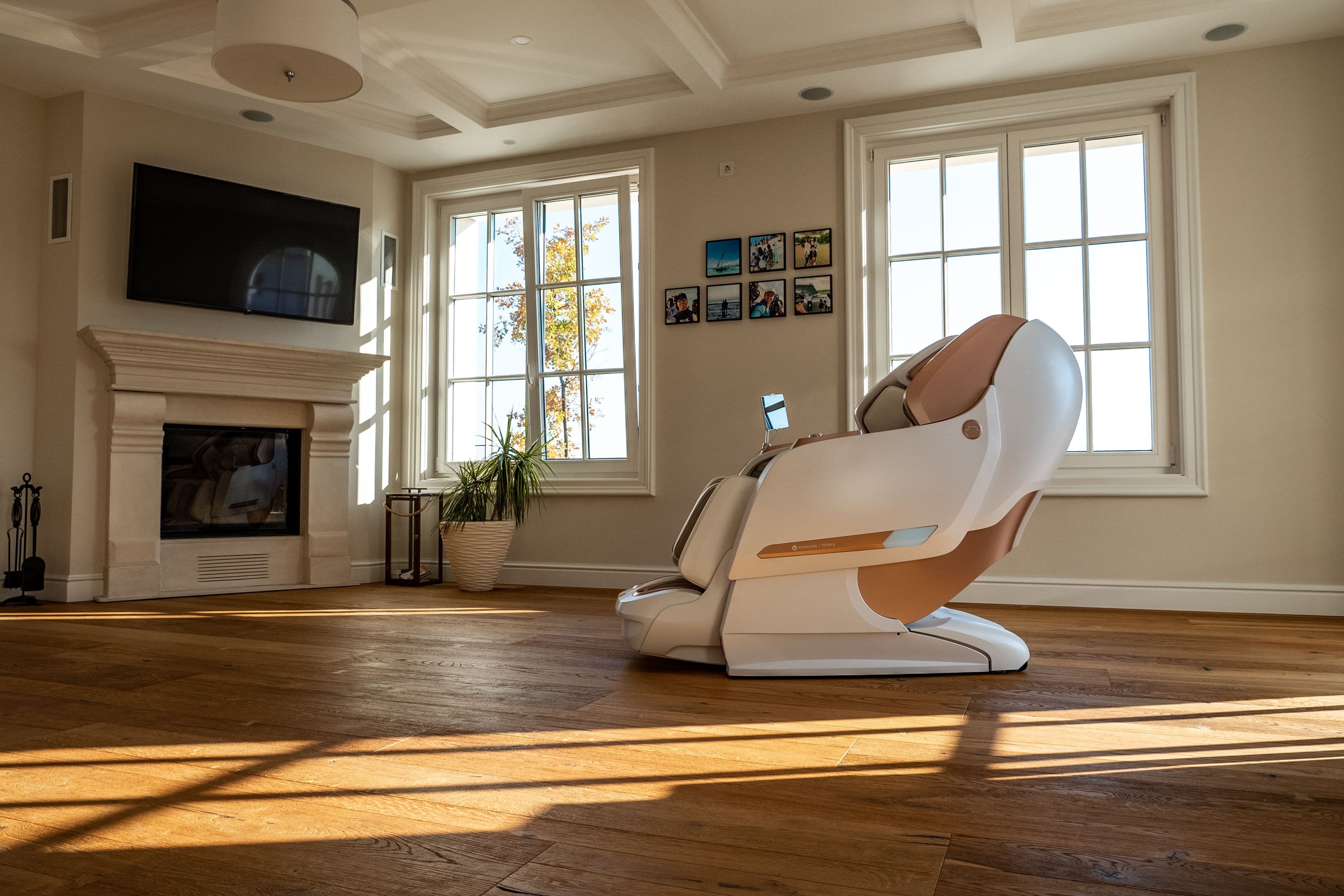
At Komoder we start from a simple idea: if you're going to invest in a protagonist piece, it should also give something back to you in your daily life. That's why, for someone who wants to go a step beyond traditional comfort, it makes sense to consider a massage armchair with careful aesthetics: a solution that unites presence in the living room and rest ritual at home.
Quick map of avant-garde styles (and where they work best)
- Organic: brings warmth and visual softness. Works great in rooms with many straight lines. Comfort key: enveloping backrest and medium firmness.
- Minimal: brings order and silent elegance. Shines in bright and neutral spaces. Comfort key: well-proportioned seat (not short or too deep).
- Sculptural: brings impact and personality. Better in spacious rooms or protagonist corners. Comfort key: useful armrests and real lumbar support.
- Swivel: brings versatility and conversation. Ideal near windows or social areas. Comfort key: stable base and comfortable posture when rotating.
The best result comes when you choose the style thinking about your house, but also about your body: design enters through the eyes, and comfort decides whether the armchair becomes a habit.
If you're over 40 and looking for a modern home that also cares for you, the perfect avant-garde armchair is not the most "trendy" one: it's the one that combines an aesthetic that represents you with comfort that you notice every day. When that piece fits, the living room changes: not only does it look better, it's lived better.