 Alejandro C.
When comparing massage chairs, it's not enough to look at "how many programs it has". What really makes the difference is how it massages (rollers, airbags, techniques), who it's designed for (height/weight, daily use, needs) and what experience you want: general relaxation at home, a more therapeutic massage or a very "Japanese" deep shiatsu feeling.
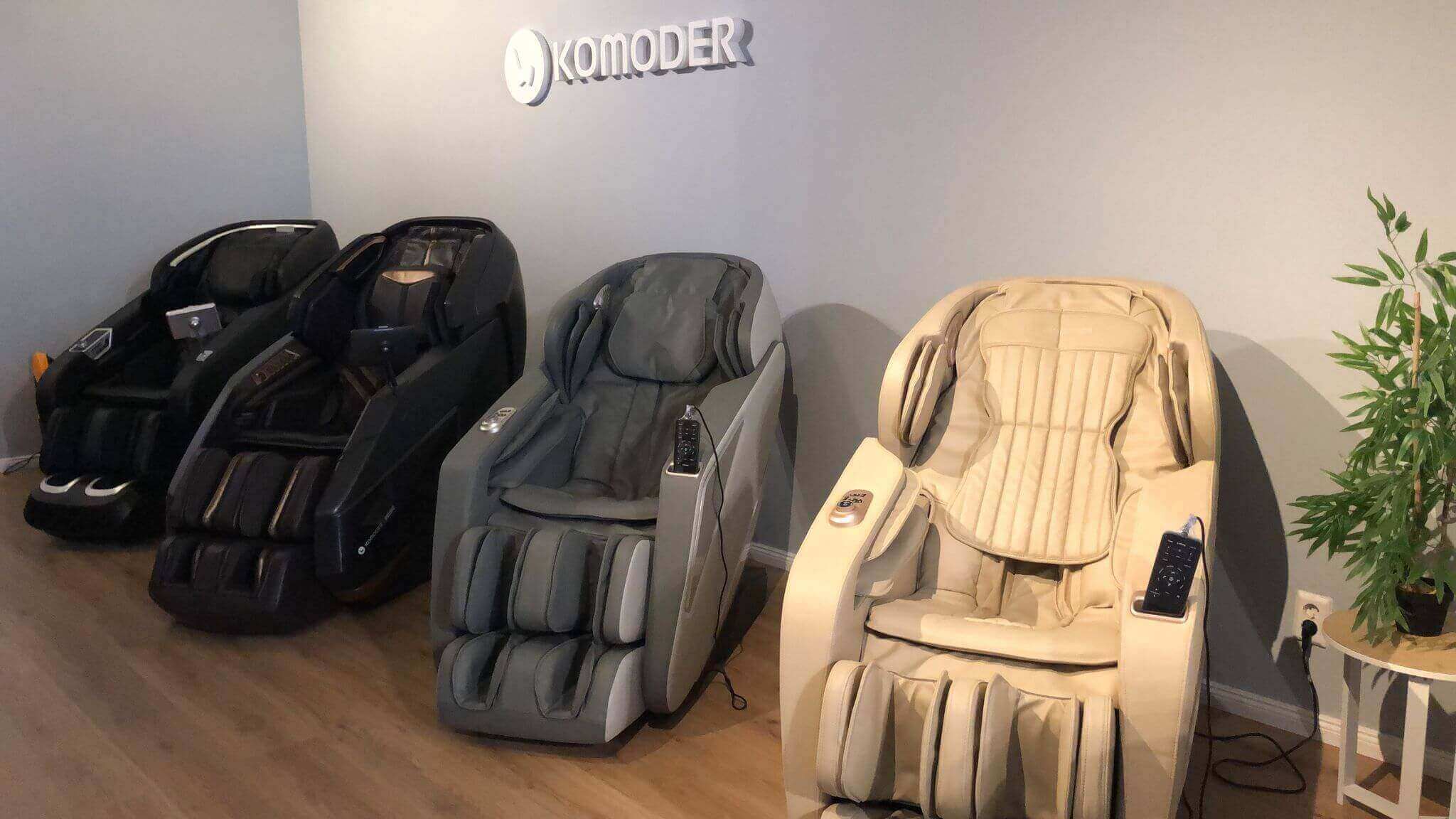
At Komoder we organize our catalog to make it easy to get it right: from balanced models for regular home use to ranges with more power, tactile control and specific technologies. And besides, the Japanese D.Core chairs (like Cirrus) play in a different league because of their mechanical approach and patented systems. This guide brings it down to earth with clear comparisons and practical buying criteria.
What "massage chair differences" means at Komoder (and why it matters)
In the market there are many "relaxation chairs" that look similar on the outside, but change a lot inside. At Komoder you'll see that the differences are concentrated in three layers: the mechanics (rollers and rail), the pressure (airbags and their distribution) and the user experience (controls, heat, zero gravity, customization).
That's why, before choosing, it's good to define your actual goal: mental relaxation at the end of the day, muscle relief after sports or sedentary work, or a combination for the whole family. With our customers, what works best is to first decide "what will I use it for" and then fine-tune by power, type of massage and ergonomics.
The 6 keys that change the most between models
When we compare chairs, these variables are the ones you notice the most in daily use. If one changes, the feeling changes:
- Techniques and programs: more variety is not always better, but it does help adjust to different users.
- Rollers: number, intensity and range (what they "cover" in back and neck).
- Airbags: number, positions and how they wrap shoulders, arms, hips, legs and feet.
- Heat: where it acts (back, lumbar, legs) and if you use it as "preparation" or as a closing.
- Controls: remote, side buttons, voice control or touch tablet (convenience and speed).
- User profile: recommended height/weight and whether the chair "fits" well for tall people.
With these six keys clear, the rest (design, extras, finishes) is chosen with much more confidence.
Differences by ranges: mid, premium and premium plus
A quick way to understand Komoder is to see how the experience evolves as you move up in range. In general terms, as you advance, you find more programs, more airbags, more control (tablet/voice) and, in some models, more intensity or more complete massage.
If you want a direct reference, here's our massage chair comparison, where you can see at a glance how techniques, control, heating, rollers and recommended limits change by user.
| Model | Range | Techniques | Programs | Airbags | Rollers | Heat | Quick recommendation |
|---|---|---|---|---|---|---|---|
| Victoria II | Mid | 5 | 8 | 16 | 4 | Back | Simple home use and relaxation routine. |
| Focus II | Mid | 5 | 12 | 28 | 4 | Back | More airbag pressure without moving to premium. |
| Focus III | Mid | 6 | 15 | 24 | 4 | Back | More variety of automatic massage. |
| Marina Medical II | Premium | 11 | 21 | 20 | 4 | Back | Demanding profile seeking more techniques. |
| Luxury II | Premium | 5 | 12 | 22 | 6 | Back and legs | Balance between power and overall comfort. |
| Veleta II | Premium | 6 | 23 | 36 | 4 | Back | Many programs and airbag pressure. |
| Prime | Premium Plus | 6 | 12 | 38 | 6 | Back and legs | Enveloping (many airbags) and complete experience. |
| Titan II | Premium Plus | 6 | 24 | 24 | 8 | Lumbar | More rollers and more programs for the family. |
The key is not "which one is best", but which one fits your way of using it: a single user with a fixed routine, or multiple users with different tastes and need for quick adjustments.
The special case: Japanese massage chair (D.Core) vs "conventional" Komoder chairs
When someone is looking for a Japanese massage chair, they're usually asking for a very specific sensation: deep shiatsu, mechanical, with very "real" roller movement and specific technologies in arms/legs that aren't as common in generalist chairs. At Komoder, that experience is especially represented by the D.Core family.
At Komoder we usually explain it like this: if your priority is varied relaxation for home, a mid or premium range will give you many options and a very comfortable experience. If what concerns you is massage technique (how the muscle "works") and you're looking for something distinctive, then it's worth taking a closer look at D.Core.
Cirrus vs Cirrus II vs Stratus: main differences
All three share the Japanese approach, but they feel different. Here's the essential to decide quickly:
| Model | What makes it different | Ideal if you're looking for |
|---|---|---|
| D.Core Cirrus | Oscillating rollers in back, arms and calves with Wave Arrays technology, plus 3D+ True Shiatsu. | A very "mechanical" and complete sensation, with arm and leg work that's uncommon. |
| D.Core Cirrus II | Takes a step further with Tornado (arm rollers), Energy Wave (legs) and second-generation 3D+ True Shiatsu; includes extendable footrest. | A more advanced Japanese massage, with therapeutic focus and adjustments for different heights. |
| D.Core Stratus | NIN-patented Japanese mechanism and massage with roller systems (especially in back and arms). | Prioritize roller quality and Japanese technique in the upper body. |
A practical way to choose: if you especially care about legs and arms with unique technology, Cirrus (and especially Cirrus II) usually fits very well. If your priority is a Japanese massage more focused on back and arms with an approach different from standard 3D, Stratus is very interesting.
Massages for relaxation: which model fits your routine
The "best" massage chair is the one you use. To make it a habit, you need a comfortable experience, quick to activate and consistent with your daily life. That's why, in addition to specifications, it's good to think about real scenarios: coming home from work, recovering from the gym, relieving tired legs or disconnecting before sleep.
At Komoder, when we advise customers, we usually group the decision into three profiles. They don't replace a trial, but they help guide without getting lost in details:
- Daily relaxation without complication: mid-range models (Victoria II / Focus II / Focus III) if you want clear programs and easy use.
- Premium comfort "for the whole house": premium and premium plus models if you're looking for more customization, touch control and a more enveloping experience.
- Japanese shiatsu and technical sensation: D.Core (Cirrus, Cirrus II, Stratus) if you care about "how it massages" above the number of extras.
The closing is simple: define your routine (frequency, time of day and most important areas) and the right chair chooses itself. Technology should serve you, not force you to adapt to it.
If you're torn between two options, a good tiebreaker is to think about what you value most in a session: more programs to vary, more pressure from airbags, or a roller technique that reminds you of a manual massage? With that answer, your choice will be much more confident.