 Alejandro C.
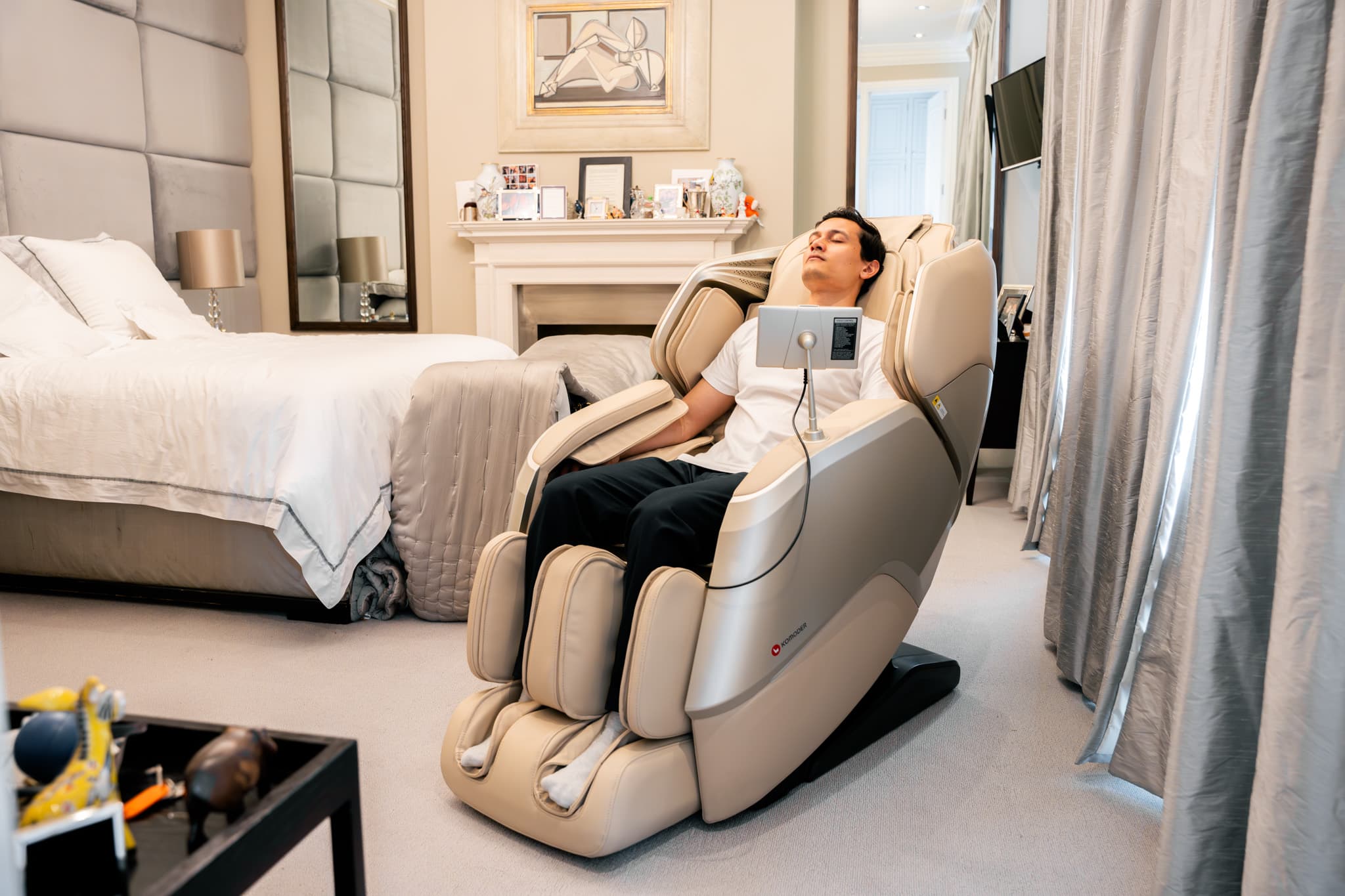
A massage chair is not "a whim": well chosen, it becomes that moment of the day when your body slows down and your mind does too. For those over 40, who work long hours or feel their back more "loaded" than before, the difference is in something very simple: moving from just sitting down to recovering at home, with an experience that combines reclining, ergonomics and automated massage.
What exactly is a massage chair (and what it isn't)
A massage chair integrates motorized mechanisms (rollers, airbags, vibration, heat, automatic programs) to reproduce different types of massage without you needing to do anything more than select a mode and adjust the intensity. What matters is not that it "moves", but that it does so with travel, pressure, and control adaptable to your body.
On the other hand, a reclining relaxation chair (even if very comfortable) focuses on posture: elevate legs, recline the backrest, support cervicals... and that's it. It's ideal for watching a series, reading, or resting, but it doesn't seek the same goal: stimulating muscles and relieving tension actively.
Massage chair vs. reclining relaxation chair: quick comparison
The phrase that sums it up: if your goal is to be comfortable, a reclining chair might suffice; if your goal is to end the day better than you began it, a well-chosen massage chair plays in a different league.
- Massage chair
- Best features: programs, intensity, airbags, heat, massage on back and legs
- Ideal if: you want to recover your body daily in 10–20 minutes
- Keep in mind: dimensions, type of massage, after-sales service
- Reclining relaxation chair
- Best features: postural comfort, reclining and "rest" relaxation
- Ideal if: you seek comfort for the living room with extended use
- Keep in mind: it doesn't replace the massage sensation or leg work
- Electric chair or armchair (without massage)
- Best features: reclining and elevation with motor (effortless)
- Ideal if: you prioritize ease of use and smooth adjustments
- Keep in mind: the "plus" of massage depends on the model; don't take it for granted
Why from age 40 onwards a massage chair fits so well
With time, your body stops forgiving certain things: hours of sitting, stress, little movement, long trips, poorly compensated exercise... And, without you realizing it, rest becomes "shutting down" instead of "recovering". That's where a massage chair changes the approach: you don't just rest, you break the tension cycle.
At Komoder we see it often: people who buy thinking of "a moment of relaxation" and end up creating a ritual. Ten minutes when you get home, before dinner, or after gentle exercise, and your body appreciates it because there's consistency, which is what has the most impact on real wellbeing.
Moreover, for a profile with medium/high income, the value is not just in the technology: it's in claiming time without depending on schedules, displacements, or "I'll go get a massage sometime". The chair is there, ready, and that makes you use it.
What to look for when choosing a massage chair (without making a mistake)
Smart shopping is not about looking for "the most expensive" or "the cheapest", but the one that fits your body, your space and your way of resting. These are the criteria that really matter:
1) Type of massage: 2D, 3D and 4D (what it really means)
The terms might sound like marketing, but they describe how the rollers move and how you perceive the massage:
- 2D: movements on two axes (up/down and left/right). Good base if you seek soft or medium sensations.
- 3D: adds depth (in/out). Feels more "hands-on" because it can work pressure with greater realism.
- 4D: adds variation in rhythm/speed and more dynamic intensity. Usually gives a more personalized massage with a more organic feel.
Don't get stuck on the label alone. Check if there's intensity adjustment, zones, shoulder/back width, and number of programs. That's what determines if it's "your" chair and not one you'll use for two weeks.
2) Automatic programs and customization
A good program catalog makes your life easier: "relaxation" mode, "recovery", "neck and shoulders", "lumbar", "legs"... The key is being able to adjust without complications: intensity, time, zone, and if it exists, profile memory.
At Komoder we usually recommend thinking about two scenarios: one for daily use (10–15 minutes, medium intensity) and another for a longer session (15–25 minutes, more complete). If the chair doesn't adapt to both, you'll end up using it less.
3) Reclining and ergonomics: from relaxation chair to "active rest"
A modern reclining chair must fit aesthetically, yes, but it should also support the body: cervical, dorsal, and lumbar. Reclining is not just "lying down": it's seeking a posture in which the massage feels uniform and comfortable.
If you're coming from a reclining relaxation chair, pay attention to the transition: that the backrest and footrest move smoothly, there are no odd pressure points, and cervical support doesn't leave your head "hanging". That detail separates a nice purchase from a purchase you use every day.
4) Airbags in legs and arms: the silent "wow"
Airbags (air bags) provide compression in calves, feet, arms, or shoulders. For many people, especially from age 40 onwards, this is what surprises most because it provides a sense of relief and rest in extremities, something that a motorized reclining chair without massage cannot offer.
Check that you can adjust the pressure: soft compression to relax is not the same as strong compression that bothers you. The best chair is one that lets you regulate, not one that "squeezes more".
5) Heat therapy, sound and extras that really add value
Heat (thermotherapy) can make the session more enjoyable, especially in the lumbar area. There are also extras like speakers, voice control or apps. If they suit you, great; if not, prioritize what's essential: massage, ergonomics and reliability. The rest should add to the experience, not distract from it.
6) Real dimensions, access and placement in your home
Before falling in love with a model, measure carefully: width, depth, height and space to recline. Also check doors, hallways and elevator. Many disappointments come from here.
At Komoder we work a lot on this with customers because it makes the difference between a comfortable purchase and an odyssey. A good choice considers your living room as much as your back.
How to integrate a massage chair in a modern living room (without it looking like a machine)
Technology doesn't have to break aesthetics. Today a massage chair can be a protagonist and, at the same time, discreet if you care about three things: upholstery, proportions, and location.
In our case, when we design and select finishes under the Komoder brand, we look for that balance: contemporary materials, clean lines and feeling of "furniture" rather than "machine". The goal is that you want to see it in the living room, not hide it.
- Upholstery: neutral tones (gray, beige, brown) usually integrate better and age well.
- Proportions: a chair that's too bulky dominates the space; a well-proportioned one reads as a piece of comfort.
- Location: near a light source or next to an auxiliary table turns use into routine (and routine is what delivers results).
A simple trick: accompany it with a rug or a throw. This way, visually, it's understood as a rest area, not as a gadget.
Buy smartly: warranty, service and the difference between "price" and "value"
With this type of product, real value appears over time. That's why, in addition to benefits, it's worth checking warranty, spare parts availability, support and advice. A massage chair is not an impulse purchase: it's an investment in daily wellbeing.
KOMODER was born in 2011 with a clear ambition: to bring to homes and professional environments massage chairs with cutting-edge technology and ergonomic design, even developing proprietary product under the brand to meet real needs. That experience is especially noticeable in two moments: when you choose (because they advise you) and when months pass (because service matters).
If right now you're comparing options and want to explore ranges and styles calmly, you can browse our massage chairs at komoder.es and locate what type of experience fits you: softer, more intense, more focused on legs, more complete.
And if you're drawn to a more specific feeling — for example, an approach inspired by Oriental techniques and ergonomics — at Komoder we have lines like DCore with Japanese inspiration, designed for those who seek detail in massage and careful finishes.
Common questions before deciding
How much time should I use it? The most common is 10–20 minutes per session. The key is consistency and adjusting the intensity so it's pleasant, not "endure it".
Does it work for everyone? Most people enjoy it without problem, but if you have injuries, acute pain, pregnancy or specific medical conditions, it's prudent to consult a professional and use soft intensities.
Does it require maintenance? Usually little: cleaning the upholstery, proper use and following the manufacturer's instructions. What's important is buying from a provider who responds if you need support.
What if I want something simpler? If your priority is posture and comfort, a motorized reclining chair might be enough. If you also want a sense of recovery, then the massage chair is the logical step.
In the end, the right decision is the one that makes you think: "I'm going to use this". Because a good massage chair doesn't change your rest by magic, it changes it by habit. And when the habit is comfortable, quiet, and just a button away, it becomes part of your life... which is exactly what you're looking for when you want to rest better at home.